 It pays to pay with Onestpay

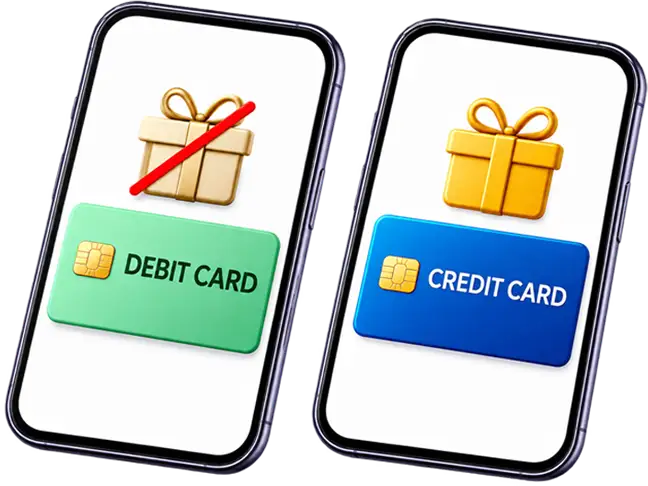
You’re about to pay $40 at a store. You can tap your debit card and pay from checking, or use a credit card that earns cashback. The price is the same either way, but the bank that issued the card can earn a very different amount from the transaction. That difference helps explain why credit card rewards are common and debit card rewards are harder to find.
Summary
- When you pay by card, the issuing bank receives part of the merchant’s payment costs. That portion is called interchange.
- In a published comparison of the same $40 in-store purchase, interchange was about 23¢ on debit subject to the federal cap and 67¢ to 94¢ in the credit card examples.
- The gap gives credit card issuers more revenue from the purchase that they can use to help fund rewards. Debit cashback can also come from another source, such as a discount from a participating brand.
What happens when you tap your card?
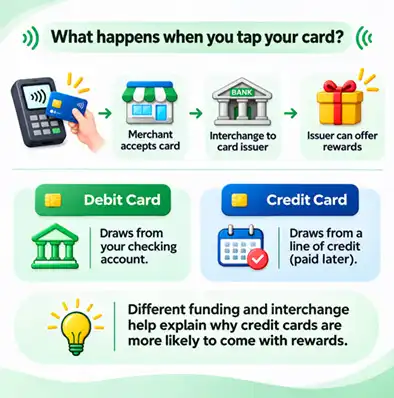
When a merchant accepts a debit or credit card, it pays for the transaction to be processed. One part of that cost is interchange, which goes to the bank or credit union that issued the card. It’s separate from the cashback or points you might see in your account. Interchange is revenue to the issuer, and rewards are one way a credit card issuer can use part of that revenue to make its card more attractive.
The two cards also draw on different sources of money. A debit purchase draws from your checking account. A credit card purchase draws on a line of credit and goes on a bill you pay later. That difference matters to your budget. The difference in interchange helps explain why one card is more likely to come with rewards.
How did the Durbin Amendment change debit card fees?
The Durbin Amendment, part of the 2010 Dodd-Frank Act, directed the Federal Reserve to regulate debit card interchange. The Fed’s rule, Regulation II, put the fee limit into effect in October 2011. It generally applies to issuers with at least $10 billion in assets, counting affiliates. Smaller issuers generally qualify for an exemption, and credit card transactions fall outside the debit cap. Federal Reserve announcement on Regulation II
For a bank subject to the cap, the amount it can earn in interchange on a debit purchase is limited. That leaves less room to fund cashback from the transaction. Some banks and credit unions still offer debit rewards, including through merchant offers or other sources of funding.
What does the difference look like on the same $40 purchase?
A December 2025 report by Robert J. Shapiro and Jerome Davis for the Progressive Policy Institute examined 2024 interchange examples for Visa and Mastercard. Using the same $40 purchase amount lets you see how much the fee can change with the card type and where you shop.
In-store
Credit interchange compared with capped debit
Online
View figures as a table
| Interchange on a $40 purchase | In-store | Online |
|---|---|---|
| Visa or Mastercard debit subject to the cap | About 23¢ | About 23¢ |
| Mastercard credit examples | About 67¢–90¢ | 88¢–$1.14 |
| Visa credit examples | About 67¢–94¢ | 82¢–$1.06 |
In the in-store examples, the issuing bank received about three to four times as much interchange on credit as on capped debit. The credit examples illustrate how fees vary across transactions. Progressive Policy Institute report, section IV
Put that in terms of a reward. A 1% cashback offer on $40 costs 40¢. On the capped debit example, that exceeds the entire 23¢ in interchange before the issuer accounts for any other costs. In the credit examples, 40¢ is less than the interchange the issuer received. A bank can fund a debit reward from other revenue, but this example shows why matching a credit card reward from capped debit interchange alone is difficult.
Did merchants pass the savings on to shoppers?
A lower debit interchange fee can reduce a merchant’s cost of accepting a debit payment. Shoppers, however, typically see one posted price whether they pay by debit or credit. If a merchant lowers that shared price, the discount goes to credit card shoppers too, even though those transactions can still cost more to accept. A merchant could offer a debit discount where permitted, but that requires a separate price or discount at checkout.
Robert Shapiro and Jerome Davis cite a Richmond Fed merchant survey that illustrates the gap between lower fees and lower shelf prices. Of the merchants surveyed, 77.2% reported no price change, 21.6% reported raising prices, and 1.2% reported lowering prices after the rule took effect. Those responses show that price cuts were uncommon in the survey. They do not establish what caused merchants to raise prices. Shapiro and Davis, Progressive Policy Institute report
How does OnestPay fund debit cashback?
OnestPay uses existing gift card infrastructure to fund cashback through merchant discounts. When you choose a participating brand and authorize a purchase, OnestPay obtains gift card value for that brand at a wholesale discount. That happens behind the scenes. You get a payment code to use at checkout, and OnestPay credits part of the discount to your wallet as cashback.
Because the reward comes from the wholesale discount, the debit interchange cap doesn’t determine how much cashback OnestPay can offer. You can earn cashback on an eligible OnestPay purchase even if your bank offers no rewards on ordinary debit purchases.
Keep your bank and your debit card
Link any eligible debit card you already use from a U.S. bank or credit union. You can keep your current bank or credit union and checking account.
Keep your money at your bank until you shop
Linking your card leaves your funds in your checking account, where your bank or credit union’s usual protections continue to apply. You don’t need to move money into an OnestPay wallet. Your linked card is charged only when you authorize a purchase.
If you prefer to pay from checking, look up a store or restaurant where you already plan to shop. You can see what the brand offers before deciding how to pay. Explore OnestPay